 admin
adminIntroduction
Most people believe permanent residency begins with a work visa or a student visa. That belief quietly disqualifies thousands of smart applicants every year.
What many students and first-time travelers don’t realize is this: some travel visas are designed as legal entry points into long-term residency pathways—if you know how to use them correctly.
In this guide, you’ll discover little-known travel visa opportunities that can legally evolve into permanent residency (PR). We’ll break down which countries offer these pathways, how they work, who qualifies, and how African and international students can use them strategically—without guesswork or risky shortcuts.
If your long-term goal is to study, work, or settle abroad, this article may change how you approach visas forever.
What Are “Hidden” Travel Visa Pathways?
Hidden travel visa opportunities are legal short-term visas—tourist, visitor, cultural exchange, or working holiday visas—that allow applicants to:
- Enter a country legally
- Build travel or local history
- Transition into student, work, or residence permits
- Eventually qualify for permanent residency
These pathways are not scams. They are under-utilized legal options embedded within immigration laws but rarely explained clearly—especially to African applicants.
Why This Matters Now
Global immigration systems are changing fast. Countries facing:
- labor shortages
- declining populations
- international student competition
are quietly relaxing visa transition rules.
For informed applicants, this creates new doors—especially if you don’t yet qualify for direct PR or sponsored work visas.
Who Should Read This?
- African and international students
- First-time visa applicants
- Travelers planning long-term relocation
- Scholarship seekers building travel history
- Applicants facing repeated visa rejections
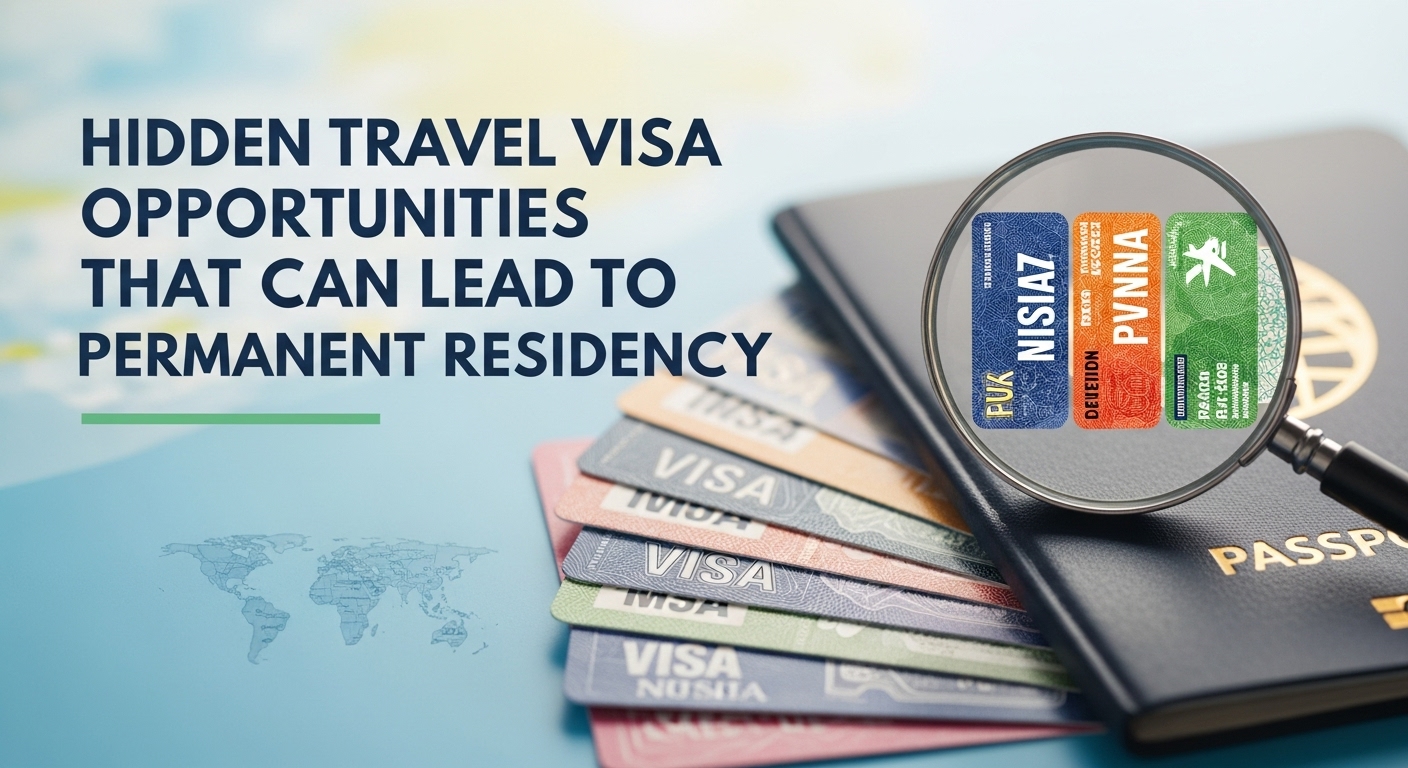
Hidden Travel Visa Opportunities That Lead to Permanent Residency
1. Visitor Visas With In-Country Status Change
Some countries legally allow visa conversion after entry, provided you meet requirements.
Examples include:
- Canada – Visitor → Study Permit → Work Permit → PR
- Australia – Visitor → Student → Temporary Graduate → PR
- United Kingdom – Visitor → Student (outside UK but planned pathway)
Why it works:
Being inside the country improves document verification, school access, and credibility.
Important: Conversion rules are strict—never work illegally on a visitor visa.
2. Working Holiday & Youth Mobility Visas
These visas are powerful but underused, especially by Africans.
Countries include:
- Germany
- Portugal
- New Zealand
Benefits:
- Legal work rights
- Local experience
- Employer sponsorship opportunities
- Easier transition to work or residence permits
Many applicants use these visas to secure skilled employment, which later qualifies them for PR.
3. Cultural Exchange & Language Visas
Often dismissed as “temporary,” these visas are strategic entry points.
Countries offering transition-friendly options:
- France
- Spain
- Japan
How they lead to PR:
- Language visa → Student visa
- Student visa → Work permit
- Work permit → Permanent residency
They’re especially useful for applicants with limited funds or weak travel history.
4. Long-Stay Tourist & Digital Nomad Visas
Some “tourist” visas are actually residency-friendly long-stay visas.
Examples:
- Portugal – Long-stay visitor & digital nomad pathways
- Spain – Non-lucrative residence visa
- Greece – Long-stay visitor permits
Why they matter:
- Legal residence up to 1 year
- Renewable
- Time counts toward PR eligibility
- No local employer required initially
5. Transit & Short-Term Entry That Builds Travel History
For first-time applicants, travel history is currency.
Strategic countries include:
- United Arab Emirates
- Turkey
- Malaysia
These visas:
- Improve future visa approval odds
- Unlock stronger applications for Europe, UK, and North America
- Serve as stepping stones—not endpoints
Step-by-Step Application Guide
Step 1: Choose the Right Country for Your Goal
Ask:
- Do I want PR through study, work, or business?
- Does this country allow in-country visa transition?
- Is the cost realistic for me?
Step 2: Apply for the Correct Travel Visa
Prepare:
- Valid passport
- Purpose of travel letter
- Proof of accommodation
- Return or onward travel plan
- Financial proof (varies by country)
Step 3: Enter Legally and Comply Fully
- Respect visa duration
- Do not work illegally
- Maintain legal status
Step 4: Transition Strategically
Depending on country:
- Apply to schools
- Secure job offers
- Enroll in language programs
- Apply before your visa expires
Step 5: Build Toward Permanent Residency
- Accumulate legal residence time
- Pay taxes where required
- Renew permits on time
- Keep clean immigration records
Common Mistakes to Avoid
- Overstaying visas (kills PR chances permanently)
- Working illegally on visitor visas
- Applying without understanding transition rules
- Using fake documents or agents
- Ignoring long-term immigration strategy
Frequently Asked Questions (FAQs)
Can a tourist visa really lead to permanent residency?
Yes—legally, if the country allows status transition and you meet requirements.
Is this approach safe for African applicants?
Yes, when done correctly and legally. Many African students use this pathway successfully.
Which country is easiest for visa transition?
Portugal, Canada, and Germany currently offer the most flexible pathways.
Do I need a lawyer?
Not always. Many applicants succeed with accurate information and proper documentation.
Does time spent on a visitor visa count toward PR?
In some countries, yes—especially long-stay or residence-style visitor visas.
Strong Conclusion
Permanent residency doesn’t always begin with a permanent visa.
For informed applicants, travel visas are not dead ends—they are entry points. When used strategically, legally, and patiently, they can unlock study opportunities, work permits, and long-term settlement options that many people never discover.
If you’re serious about studying, working, or settling abroad, don’t ignore travel visas. Use them wisely.
👉 Bookmark this guide.
👉 Share it with someone planning to travel abroad.
👉 Explore related visa and scholarship guides on Bingkobo.com.

 admin
admin