 admin
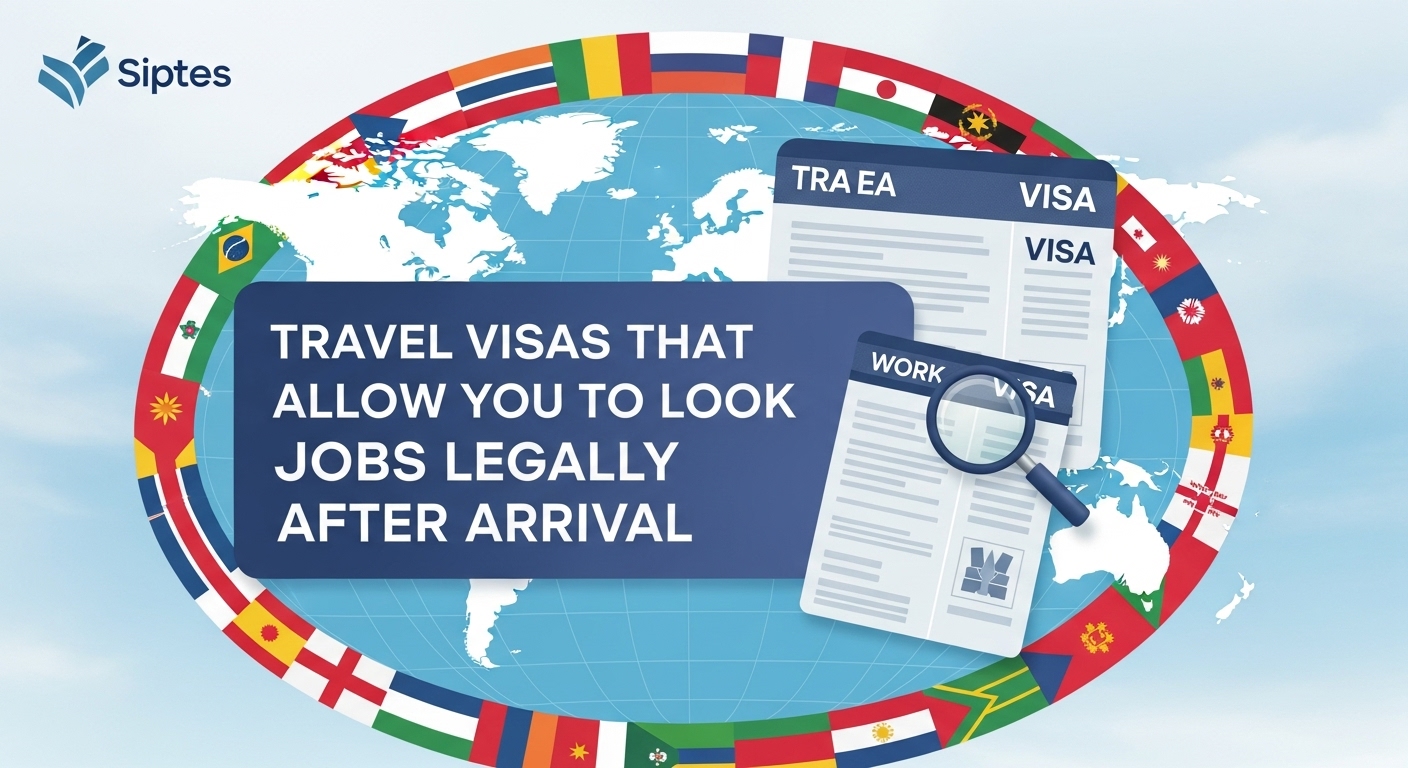
adminFinding work abroad no longer starts with endless online applications or waiting for an employer to “sponsor” you from thousands of miles away.
Across Europe, Asia, and parts of the Middle East, some travel and post-study visas now legally allow you to enter a country first and search for jobs after arrival—without breaking immigration rules.
For many African and international students, this is one of the most realistic, low-risk pathways to long-term work, study, or permanent residence abroad.
In this guide, you’ll learn:
- Which travel visas legally permit job hunting
- Countries offering these opportunities right now
- Eligibility rules you must meet
- How to apply step by step
- Costly mistakes to avoid
If you want options beyond the US, UK, and Canada, this article is for you.
What Does “Job-Seeking Travel Visa” Really Mean?
A job-seeking travel visa is not an illegal workaround and not a tourist visa abuse.
Instead, it refers to specific visa categories that:
- Allow legal entry without a job offer
- Permit job searching, interviews, and employer meetings
- Often allow status change to a work or residence permit after employment
These visas are especially valuable because:
- Employers prefer candidates already in-country
- Visa processing is faster after arrival
- You reduce rejection risks tied to overseas sponsorship
Why This Matters Now
- Global labor shortages (healthcare, IT, construction, skilled trades)
- Aging populations in Europe and Asia
- Post-study migration reforms
- Governments actively attracting young, skilled migrants
Who Should Consider These Visas?
This opportunity is ideal for:
- International students finishing studies
- Scholarship beneficiaries planning post-study work
- Graduates without employer sponsorship
- Skilled Africans seeking legal migration routes
- First-time visa applicants avoiding high rejection countries
If you’re flexible about destination and strategy, these visas can change your migration outcome entirely.
Top Travel Visas That Allow Legal Job Search After Arrival
1. Germany Job Seeker Visa
Germany offers one of the most structured and transparent job-seeking visas.
What it allows
- Enter Germany without a job offer
- Stay up to 6 months
- Attend interviews and employer meetings
- Convert to a work or EU Blue Card after employment
Who qualifies
- University graduates
- Skilled professionals
- Recognized qualifications
- Proof of funds and accommodation
Why it’s popular
Germany has thousands of unfilled roles in engineering, healthcare, IT, and skilled trades.
2. Portugal Job Seeker Visa
Portugal quietly introduced one of Europe’s most migrant-friendly visas.
What it allows
- Enter Portugal without employment
- Legally search for work
- Apply for residence permit after securing a job
Why students love it
- Low cost of living
- Simple documentation
- Friendly pathway to permanent residency
3. Austria Job Seeker Visa (Red-White-Red Card)
Austria uses a points-based system to attract skilled workers.
What it allows
- Entry without job offer
- Time-limited job search
- Direct transition to residence permit
Best for
- STEM graduates
- Professionals with experience
- Applicants under 40 (higher points)
4. Sweden Job Seeker & Business Visa
Sweden allows certain graduates and professionals to enter for job search or entrepreneurship.
What it allows
- Legal stay for job hunting
- Employer meetings
- Status change after job offer
High-demand fields
- Tech
- Engineering
- Green energy
- Research roles
5. UAE Job Exploration Visa
The UAE now offers short-term visas specifically for job exploration.
What it allows
- Enter UAE without sponsor
- Attend interviews legally
- Explore employment options
Why it’s attractive
- Fast processing
- No income tax
- Strong demand for skilled and semi-skilled workers
6. Post-Study Job Search Visas (Multiple Countries)
Many countries allow students to remain after graduation to look for work.
Examples include:
- Finland
- Netherlands
- Ireland
- France
- New Zealand
These are often easier than fresh work visa applications.
Key Benefits of Job-Seeking Travel Visas
- No employer sponsorship required initially
- Legal job hunting (no immigration violations)
- Higher employment success rate
- Faster transition to work permits
- Reduced visa rejection risk
- Pathway to permanent residency or citizenship
For students, this bridges the gap between education and long-term settlement.
Step-by-Step Application Guide
Step 1: Choose the Right Country
Consider:
- Your qualification recognition
- Language requirements
- Job market demand
- Cost of living
Step 2: Prepare Core Documents
Most countries require:
- Valid passport
- Academic certificates
- CV (European or international format)
- Proof of funds
- Health insurance
- Accommodation proof
- Motivation letter (job search intent)
Step 3: Credential Recognition
Some countries require degree verification or professional recognition before visa approval.
Step 4: Submit Visa Application
- Apply through embassy or official portal
- Attend biometric appointment
- Pay visa fee
Step 5: Travel & Job Search
Once approved:
- Register address (where required)
- Open bank account
- Register with employment offices
- Attend interviews legally
Step 6: Convert to Work or Residence Permit
After securing employment:
- Employer issues contract
- Apply for work/residence permit
- Begin long-term stay legally
Common Mistakes to Avoid
- Using a tourist visa for job hunting
This can lead to bans and future visa refusals. - Ignoring qualification recognition rules
Some jobs require approval before hiring. - Insufficient proof of funds
Underfunding is a top rejection reason. - Applying without a job search plan
Embassies assess seriousness and preparedness. - Missing deadlines for status change
Overstaying invalidates future applications.
Frequently Asked Questions (FAQs)
Can I work immediately on a job-seeker visa?
No. You can search for jobs legally, but work starts only after converting to a work permit.
Is this visa easier than a work visa?
Yes. Job-seeker visas remove the need for upfront employer sponsorship.
Can Africans apply for these visas?
Absolutely. Many African applicants are approved yearly, especially graduates and skilled workers.
Do I need IELTS?
Not always. Language requirements depend on country and job sector.
Can this lead to permanent residency?
Yes. Most countries allow PR after 3–5 years of legal work.
Conclusion
The idea that you must secure a job before leaving your home country is no longer true.
With the right strategy, travel visas that allow legal job search offer a smarter, safer, and more achievable route to working and settling abroad—especially for students and skilled Africans.
If you’re serious about studying, working, or relocating legally:
- Bookmark this guide
- Research your best-fit country
- Prepare your documents early
- Explore more visa and scholarship guides on Bingkobo.com
Your opportunity might start after arrival, not before.

 admin
admin